Sunday, 3 June 2012

Rosa Crucis


Rosa Crucis

It took 100 years for the rosecrucian movement to go public in the person of Martin Luther in 1517. There is no doubt amongst historians that  the project of the reformation was in essence a rosecrucian one. 


But the view that there was an angle and involvement by cardinals of the Catholic Church at the time will be highly controversial. Yet there was.


Secondly: the breaking down of political and religious blocks was not restricted to Western Europe only. It also happened in the East. The family enterprise of the great Khans was put duly under pressure and China was the first to detach itself from the rest of the family empire preserving most of the great traditions of the great (Mongol) Khans. 


The ulus of the sons of Jochi fell apart in three sections stretching from Siberia to Western Europe down to Turkey if not Egypt. 


Many of the Southern sections became muslims. Western Russian sections split into jewish and nestorian christian sections. 


Each of those religions claim to be much older as they really are. They were formed at this time and their holy books consequently were also formed around this time according to the same blueprints, the muslims finishing theirs first, the jews finishing theirs last.


It is not without cause that the art of printing books was discovered just around this time. 


The blue print for the holy writ was rosecrucian and is still preserved in the teachings of Zarathustra. Which by consequence must have been the religious context of the Golden Horde. 
Florence, John XXIII's grave the largest
tomb at his time...


The rosecrucian movement then was the glue which held together a word falling apart. The order itself was established exactly when the papacy lost control, but on the other hand the order developed within the bosom of its curia. 


How could that have been? 


When Martin V was elected in Konstanz there were three popes in Europe, which were all forced to resign. Technically speaking one of them had to be the real one. That is a matter of interpretation, but we may assume that John XXIII - might not be far off. 


Florence, beheading of John the Baptist
He was not at all hostile towards a changeover to Martin V in the end. That is after he had suffered arrest and imprisonment. 


The Medici in Florence had always believed in his legitimacy and built an enormous memorial to his legacy and dedicated it to John the Baptist. The largest and most impressive tomb at the time the Medici gave a clear message doing this. They were saying that the Church had taken off its real head.


He - Balthasar Cossa - became a cardinal in the roman curia! If there was  any candidate to supervise the rosecrucian enterprise and have sufficient motives for it than it would have been him, assisted by the Medici.  


He then would have become its first grandmaster listening to the name John I or would have installed him. With 22 of those it was indeed interesting that the RC Church in 1958 recaptured the lead with a rosecrucian  becoming pope who took the name John XXIII. 


Some coupe! 


But the question remains: who invaded whom


At any rate from this moment in Florence the Renaissance set in. And I feel here we have arrived at the basic idea of these pages. 


If you want to make the future, recreate the past.

Thursday, 24 May 2012

the Mantle of St. Martin


Martin's Mantle

In Avignon the large scheme to create its own version of the great Khanate in Europe stranded. The Western Roman church likes to boast it has created the idea of separation of church and state, but it is not the Papacy which should be given the credit. It should be given to the European monarchs who created the idea to take the pressure out of papal claims of the period. 


France had reduced the pope to a national chaplain and to create an end to that situation the papacy had to be placed in an independant position in European context. That was not easy.


At the end of the Avignon period in 1377 every political power block in Europe had arrived at its own version of the Papacy. Well, the European monarchs must have thought: if it's good for them it can't do us any harm!


In an attempt to deal with the situation the papacy under Gregory XI was transferred to Italian Rome.  Thus Rome existed as a twin entity. Rom(us unam sanctam) and Rom(ulus), the Rome of the ulus of Jochi! Both were nurtured by the wolf or Guelph. And its history in its present form is really only 600 years old. All other claims are fraudulent.


This would have worked if Italian Rome had had any of the claimed splendor of the Roman Empire. 


But there was very little to build on, because until the period of the Latin kingdom of Byzantium the patriarchate for the west had been Ravenna and not Italian Rome. the Roman capital (Rome) had been Constantinople. 


For this reason Rome had to be re-built. This took 40 years and at times there were three popes in all. In a mild subliminal reference to the Khan the issue was settled in the 'place of the Khan' Constanze. 


All three popes were forced to resign and one for all was elected hoping to achieve an all for one: Martin V.


The clock stroke 11 november 1417.


That was an inter- esting name for the one pope for all, because St. Martin of Tours to which the name referred split his mantle in two parts, giving a poor man one halve of the mantle.


And there is another interesting co-incidence too! In Germany the alleged founder of the Rosecrucian movement, one Christian Rosecreutz was allegedly born in 1378. In this context that is an interesting date too. It is saying as much as: 


The Rosecrucian movement was born in 1378, one year after the end of the Avignon period.  


It seems that the symbol of the Rose would remain an open referral to the origins of what Batu Khan had set in motion, namely the White Order of Russia for a new Europe. 


Seeing that the papacy had stranded in family factions and political power struggles of different power blocks the situation was ended by rotating the papacy between the different power and family blocks. 


This would ensure a constant need for reform. 


To ensure some sense of direction and unity behind it all an esoteric and hidden society was created with the Rosecrucian movement.


It was RC (Rose Crucian) movement against RC (Roman Catholic) movement. Still, bear in mind that at that time the Roman Catholic church did not  resemble what the church is today, although it brought from Avignon its structure of the Curia, Cardinals and Novus Ordo. It even did not have that bastion of Tridentine Mass yet, so representative of full confident Roman Catholicism. 


It was also esoteric against exoteric Christianity. But as open power structure the movement of Batu Khan (Vatican) had stranded. 


In Italian Rome a bold new direction for Europe was set in motion. Entirely solitary and isolated from the rest of the world. Europe had escaped the clutches of the Mongol (great) order of the East.  


At least seemingly so.


Is it a coincidence that Rome translates to 'Russian Order of the Great (Mongol) Empire?' Just see it as a meaningful joke.  To safeguard the interests in the outcome of the whole enterprise the Rosecrucian Movement was created. For this purpose it needed to enlist in its membership European intellect. That policy it would succeed rather well. 


A constantly blundering papacy would guarantee this success!


With the goal in the long run to reclaim the Papacy. 


In this context it is only interesting to note that Pope Martin must have realised what the split of the mantle would have referred to. But on the other hand, it is entirely possible that he didn't. 


Friday, 18 May 2012

Europe's heritage


Europe in the 14th Century

Europeans like their outward looking attitude. The idea that civilization has started with us and has firm roots in an ancient Roman empire gradually through a renaissance incorporating the rest of the world by proxy is firmly rooted in our version of history.


But in the 14th century things looked rather different and only diplomacy has saved Europe from an entire different course of events...


Let us have a look at the map!
the golden, white and blue horde
This is roughly the situation any historian will admit to, because it concurs with our chronology and our version of events. 


It is roughly true, but nevertheless a few things are not included in this version. A few things aren't told.


This is the situation of the 16th century. This Russian empire was the heritage of the sons of Jochi Khan. But in the 13th century the sons of Jochi hadn't yet separated themselves from the Great Khanate. And with Kublai Khan becoming and emperor of China and Great Khan  actually the whole of Asia and most of Europe was subject to the Great Khan. 


It is only because severe weather changes from 900AD until 1300AD had prevented this empire to include the American continent that this continent remained firmly established in an ancient order.  But still the similarities of this order with the old order in the rest of the world remains too obvious to ignore.


Which means western Europe was isolated against the rest of the world and it should not be ignored that  Batu Khan could have conquered it if he had wanted to do that.  


There is probably only one thing, which has saved Europe from that fate: 


The fact that Jochi's sons were treated inferior to the other sons of Genghis Khan and the firm belief in Jochi's heritage that in fact they were superior to them. 


Jochi's sons had better connections and more cultural roots exactly because of the reason they were treated badly by the rest of the 'family-firm'. Jochi's genetic roots included the heritage of Byzantium as well as Genghis Khan!


One of the most important mistakes our historians make is to depict the clan of Jochi and Genghis Khan as Mongols. I agree with Fomenko's discovery that mongol really means great. 


Place yourselves in the shoes of Batu Khan. Why conquer this last remnant of the world to be conquered and place it at the feet of his uncle? And become a Khanate amongst the Khanates?


Family firm of Great Khan
For and on behalf of the family who would never accept Jochi's sons on equal basis? 


The other option would have been for Batu Khan to actually not conquer the rest of Europe, but model it after his own heritage and establish a superior culture? 


And with the diplomacy of the European princes and the Hohenstaufen Emperor Frederick Batu Khan was pushed in an entirely new direction, namely spiritual leadership of Europe. 


Whereas Batu Khan would have thought he now had spiritual and political authority (by the way the names Peter and Batu are the same and both mean firm, strong, rock) in fact it set in motion a centuries long struggle between papacy and monarchy. 


Another mistake historians make with regard to the Khans of the Horde is to depict them as savages and uncivilized as they did with the Vikings. 


They were brutal and left not much choice: 
Submit and co-operate or die!


But they had a talent of using and enhancing the skills and civilization of their subjects and hence brought with them things to Europe, which Europe hadn't seen before. 


- Architecture
- Splendour
- Literature
- Curia (government)
- Postal services


Europe didn't discover new building techniques after the cruscades through some accidental find by knight templars under some temple in Jeruzalem. They were - as previously the Vikings had done - brought by the Horde of Batu Khan. 


Old St. Nicolas Church
RC Nicolas Church
For which reason the Hanse cities were built with the same structures as in Russia. 


Look at St. Nicholas church (right) in Amsterdam. The towers are Russian. 


Although built later the Oude Kerk (above) in Amsterdam still is the oldest preserved building in Amsterdam and was dedicated to St. Nicolas in 1306 by Guy van Avesnes. St. Nicholas never did originate from Spain. He is a Russian Orthodox Saint! 


Europe built - apart from Roman Viking churches - with wood at the time. Europe hardly had any cities of note. Batu Khan brought splendour with him and established the first Universities in Europe. These orders are now attributed to Innocent III. 


For the new order of things a new language had to be invented to deal with all legal new words and entities. This was Latin. It is not a co-incidence that its structure is similar to Russian. But then you may well argue which one is first: the chicken or the egg?


And last but not least. The way of government was brought by Batu Khan also, because curia is the russian word kuren. It still is preserved in the way of government of the Vatican, really only established in Italy after the period of Avignon. 


To communicate in such a wide empire a form of postal services was developed. In those days a letter would travel 200km per day. For this reason most Euopean capital cities form concentric circles 200km apart and the epicentre of these circles?


Novgorod!


This world-wide empire though was short-lived. Through internal struggle and the struggle between the sons of Jochi and the rest of the great Khanate the empire would fall apart in different sections.


And that's the final mistake our historians make. The reformation is not a phenomenon which appeared in Europe only. At that time the whole world fell apart politically and religiously. The eastern world fell apart in Orthodox (nestorian) Christian, Muslim and Buddhism factions. The western world in Protestantism and Catholicism. 


It all happened at the same time and for the same reasons. But still even Catholicism, but also Islam and the Jewish religion at the time were far from what they would develop into during the 17th century. For which reason the muslims in this period of time really were just another form of the Nestorian creeds in the east.


That being the case Europe was confronted with an excellent opportunity! Since the weather had blocked out the Americans from the great Khanate,  Europe now saw a chance at paving its way to a superior place in the world. 


Isolated through the falling apart of the great empire Europe now started with the discovery of America. And at that with a complete rewrite of its own version of history.

Sunday, 29 April 2012

Switzerland


The road to Avignon
leads through Switzerland


The wandering Popes were only later called such when their destination was apparent. But for now we have the Latin Empire of Byzantium only approaching the boarders of France and Germany. 


For the Hohenstaufen Emperor Frederick II the appearance of Batu Khan was a terrible loss of opportunity. Although the emperors in the West were  bearing the title they didn't have the sovereignty, which was suggested by it. Not hard to establish this fact. They never coined gold! 


With the fall of the Byzantine Romans and the establishment of the Latin empire of Byzantium he would have had the opportunity to establish such sovereignty, but Batu Khan's appearance on the scene made this impossible. 


He was diplomatic enough to swiftly submit himself as did all the western monarchs. Yet they did this in such a way that they could maintain the state of affairs as much as possible.


The conversion of a possibly nestorian (arian) Batu Khan to a western form of Christianity was brought about by an encounter with St. Francis of Assisi, which brought about a whole new order in the West.

For the western monarchs this was a dual power structure. Church and State. King and Emperor. 


Of course for Batu Khan's usurped Papacy this wasn't about separation of powers. For which reason the Pope and the catholic Emperor clashed frequently. 


A novus ordo had to be carved out and this extended the boundaries of the Great Empire further to include Germany and left Europe with only France, England and Portugal to be incorporated..


A new order needed a new financial basis and the popes continued to wander until such was established. And it was established in Switzerland. 


Once that was a fact a new dynasty of western Emperors was needed to support that order of things. 


This dynasty was the Habsburgs. Emperor Rudolf was the first in line to be crowned King of the Romans. Do note that he was not even crowned Emperor, he was King under the Great lordship of the Papacy. 


And the Latin empire still was that of Byzantium. Frederick, though excommunicated, was still alive and the old Emperor of Byzantium still was Emperor in Nicea. 


Rudolf I
To mark the newly acquired boundaries Aachen was chosen as the coronation site and especially for this purpose a Cathedral was built. Not by coincidence does Aachen mean the city of the Chan or Khan. 


Only when in Europe the memory of a Great Khan in the East waded a substitute had to be created by historians and the idea of  the great monarch = the great Khan - was transferred to 'Charlemagne', meaning just that: great Monarch. And of course this had to be in Aachen also!


With a new financial, religious en governmental order the golden Horde now had established itself firmly in almost the whole of Europe. 


It will still take a few years to establish this order and then France could be taken on.


There were several obstructions for that. The Knights Templar were powerful in France and they represented the old financial order of Constantinople (a.k.a. Rome at the time). 


Moreover France was a deeply religious country with many roots to the original Greek churches and deeply attached to a lively form of Christianity, believing that Jesus really was one of theirs. 


With a new financial order under the Habsburgs the Templar really had to go. But King Philip was only prepared to do that if the Papacy made a firm statement in the direction of France.


That is Philip was only prepared accept the new order if the Pope would live on its soil. If only to keep an eye on him. 


And the papacy was tired of wandering. And so the Papacy moved in to Avignon. 


Bingo! The King France must have thought! With catastrophic consequences for the Knight Templar and those in France who had other religious ideas as those of the Pope.


If it weren't for England and Portugal that is. About the only two places in Europe which still had not entirely become dependent on the golden Horde.


England would be a harder nut to crack, because it had taken over the functions of the Byzantine Empire and many Byzantine high officials had fled there and became part of the nobility. England in so doing preserved the rich history and cultural achievements of Byzantium. And would remain in opposition to the Pope and the grand oriental order it represented for a long time.


Friday, 20 April 2012

Horde of the 12th/13th century..


Achievements of the Horde
in 12th/13th century Europe

Traditional history likes the idea that the Mongol conquerors lived in tents and Europe - under 1000 year guidance of the Papacy - had a flourishing civilisation. 


The contrary seems quite true. Immediately after the Batu Khan had taken over the eastern part of Europe, trade cities sprang up all over Europe. Those trade cities form concentric circles, if you take Novgorod as its centre:


There were no cities, no defence obstacles in Europe at the time and therefore Europe fell more or less into Batu Khan's hand. Until that time houses were built from wood, not bricks. The invading 'barbarians' brought with them the  building expertise and the math, just as the Vikings had done before them. But... the Vikings were just a first manifestation of the White Russian Horde.  Universities sprang up at the same time. Paris and Oxford, both given statutes - hence given order - by Innocent III, whatever they would have done before, they were no Universities. 


The Roman curia in its present form was established also by Innocent III and not by coincidence is that a Russian word: kuren meaning the same.  The same with the word order, which is the Russian word Horde. And order extended as we saw to cities, universities and under Ivan Chan III = i.e. Innocent III, also to religious communities. Hence it was this man who more or less ordered all religious orders, except for the already existing Benedictine communities. No wonder all of European monarchs payed tribute to this great prince. 


Except England - with the establishment of the Magna Charta - tried to keep its own order. Innocent III responds with fury and does not tolerate the blatant copy - but amendment and inclusion of lower ranks of nobility - of his order. But then England came to see itself as refuge for the fallen Byzantine law and order. 


For the great Khan, the curia, was a family affair and not something for the common man. It is good to see the nepotism of the papacy in those days from this angle. 


There is an interesting list of popes, which really only came into circulation around 1590. Its list only started around 1150 and gave 112 popes until the end. In 1590 an Irish monk with the name Malachy was attached to it.  


But what if the list was in fact historical and only gave the real list of popes for the west? Because before that date the popes did reside in the east? or even Alexandria, where the real st. Peter had died? 


Is there any coincidence with the fact the list starts with the establishment of the Latin Empire of Byzantium? And when Batu Khan started his conquest of Europe he has some sudden change of heart and selects a totally different course to establish his order in Europe. 


He creates an entire new vehicle. Or one thing just led to the other. Claiming the authority to appoint bishops and laying down orders on any religious community and calling for crusades against communities that would not comply. There was no place in that vision for a head of the Church in the East. From now on it was he.  


This was Western Papacy in the making. 


A power struggle of 100s of years started from there, which with the reformation was won by the European princes, but the Horde could survive this under the wings of the Papacy. 


Golden & White
Horde of the Vatican
For now though, the popes of the times wandered about. They were not in Italian Rome! Until finally the French princes gave them refuge in Avignon in exchange for doing away with the Knights Templar. But where ever the popes of those days held their courts, they were called 'the House of Batu Khan', i.e. the Vatican...

Sunday, 15 April 2012

Road to Avignon


Batu's road to Avignon

So, Batu Khan did not die in Rome? Big deal! But neither did any of the Popes between this Innocent III and Innocent IV. They were called the wandering Popes and seemed to have wandered from castle to castle, being welcomed by the locals as an incentive to trade, but not overstaying their welcome, because of the negative side effects of having the Lord of the World within your city walls. 


That is Honorius III, Gregory IX, Celestine IV and Innocent IV followed by a whole list of no. 4s! That seems as suspicious as the list of no. 3s before Innocent III. In total 18 Popes, who did not live in Rome, nor did they die there and nor were they elected there!


From Innocent IV a letter is known to the Great Khan in far East Asia:


Kuyuk Khan in China. So much
for the tale of Marco Polo
'discovering' China!
Pope Innocent IV (1245) to Kuyuk Khan:
"For good reasons are we driven to express in strong terms our amazement that you according to what we have heard, that you have invaded many countries belonging to Christians and to others and are laying them waste in a dreadful ruin and with unabated fury you continue, sparing neither sex nor age, raging against any and all with the sword of punishment..."

After which Innocent IV asks Kuyuk to submit to his authority. Kuyuk replies:


Kuyuk Khan (1247) to Pope Innocent IV:
"How do you know God approves of the words you speak? From the East where the sun rises to the West where it sets, I have made all the lands subject to me. Who could do this against the will of God?"

 and 

"Therefore to show us you accept peace and are willing to surrender your strongholds to us, You pope and christian princes, in no way delay in coming to us to make peace. Then we will know that you desire peace with us. But if you do not believe our words and God's command,  nor heed our advice, then we will know for certain that you desire war. "

Apparently the great Schism between East and West was that between family factions of the family of the great Khan. We may assume that the great Khan very well knew what the name Innocent stood for...


There seem to be some ambiguity with regard to the exact dates, but in 'China and Christianity' by Stephen Uhalley and Xiaoxin Wu we found following quote:


"Pope Innocent IV (1243-1254) understood that as soon as the succession dispute amongst the Mongols was settled, the christian West had to prepare for an onslaught. To prevent such a threat he sent a Franciscan (Giovanni da Pian del Carpine 1190-1252) to the great Khan Guyuk (1240-1248)"


There are some 30 years between the reigns of Innocent IV and Innocent III as well as between the great Khan Kuyuk and Batu Khan!


This sets the activities of Batu Khan well back in the early 1200s and that is exactly the time frame for Innocent III.


Then accordingly there was no Pope in Rome from early 1200s to 1378! 


Francis preaching (converting) the Pope...
But more importantly this is also the time frame for someone, who probably became the most important figure for the Catholic Church. St. Francis of Assisi!


Again, we have a person without a real name. Being associated with two locations France and Assisi in Italy. But his name might as well translate to: (the follower of) Jesus from France!


As we saw Batu Khan's conquest of the West stop at the borders of France we have to conclude that there were two forces, which held Batu Khan back from proceeding. It was the Knight Templar, who still were attached to the old order, namely Byzantium and a deeply pious population who would have regarded Batu Khan's claims as those of the anti-Christ. 


Only two figures represented an outcome for Batu Khan. Emperor Frederick II, who probably was the person to inspire Batu Khan to a new direction, safeguarding his own position. But most of all, it was Francis of Assisi. 


The relationship is uniquely described in Francis' relationship with Innocent III. It was Francis who prevented the Catholic Church in the West to tumble, but also preventing this collapse to crush Innocent (Batu Khan). As a matter of fact Francis 'converted' Batu Khan to become the leader and protector of Christianity! The situation is again more accurately described in the tale of Francis taming the 'wolves'. And so Francis became: 

PATRIARCHA SERAPHICUS

Troubadour of the Great King
FRIAR MINOR,
FOUNDER OF THE ORDER OF FRIARS MINOR,
CO-FOUNDER OF THE ORDER OF ST. CLARE,
FOUNDER OF THE THIRD ORDER OF ST. FRANCIS,
PATRON OF ITALY & THE ENVIRONMENT


The troops of Batu Khan were the wolves or 'guelphes', the later nickname of the factions supporting the Papacy. 

Monday, 9 April 2012

Batu Khan's scheme


The Lord of the West
Batu Khan

To call Batu Khan a Mongol ruler is - even to the standards of our accepted history - somewhat misplaced. Even in respect of territories ruled by the Horde, he was assigned the most Western territories and around 1241 pushed westward well into the Balkans.


Batu means 'firm' and amongst his brothers, the sons of Jochi, he was well adapted to become Great Khan.


But in the end of the day, because Jochi was not recognised as a full blood relative by his brothers, he was very well aware that this would unlikely become a reality. 


The 'golden' Horde was named after the colour of his Tent and spread almost towards the boundaries of France. Since Batu found it difficult to reign the western territories from the banks of the Volga, it is almost certain he would have founded a court in the West and I assume that this was Sarajevo, in the Balkans. 


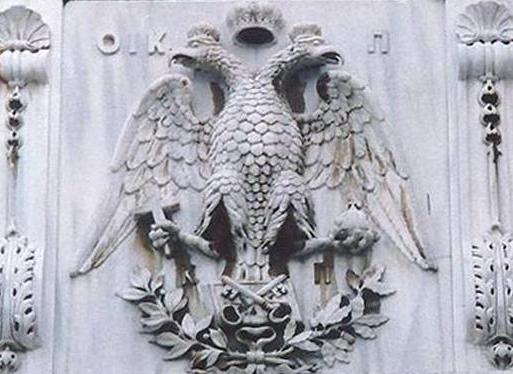
Byzantine Eagle
From there he bullied and freighted the western Monarchs and even the Holy Roman Emperor Frederick II into submission. The latter remarked, with good humour, that he would become a good falconer for Batu Khan. And indeed before the establishment of the Latin Empire of Byzantium, the western Roman Emperor was subject to the Emperor of Byzantium. 


The last remark is not without meaning. The Eagle as symbol of the Byzantine Eagle also became that of the Russian Horde and Roman Empire and is symbol over kingship. It may very well be that Frederick II inspired Batu Khan towards a whole new vision with regard to the place of Europe in the Great Horde, which may very well be one of the reasons Batu Khan did not proceed further than the Balkans. 


Tartar map of Golden Horde
The common theory is that he returned to the East upon the death of Ogedei, the Great Khan, to elect - and become himself - the next Great Khan. 


But, we have already seen, that there was little hope of a son of Jochi becoming the Great Khan. Even when he is almost given the opportunity by some of the sons of Genghis Khan - merely because of his merits - he at the last moment declines and favours Mongke to become Great Khan. 


After that, the common theory is the Batu stayed in service of the expansion of the Mongol Empire in the East, but that seems rather out of character. Batu had installed Mongke as first to remain himself the stronger second. It is much more likely that - inspired by Frederik II - Batu Khan started to work on a whole new vision for the West, which he regarded as his legitimate domains. Here his already established place as 'king maker' would take an entirely new direction. 


Batu Khan, would take the in the meantime Latin Empire of Byzantium, more westwards and would become the Pope of the West, not yet even from the Italian Rome, but from the Balkans. From there he would proclaim an entirely new vision. He would conquer Europe spiritually and use for its purpose its own established form of Catholicism. He would do that, so in the long run he would by himself outflank the ranks of the Great Khanate, the Russian Horde. 


Innocent III Lord of the World
It is for a reason that the colour of the Vatican (BatuKhan) is yellow or golden. In the long run the Vatican would become the treasurer and guardian of the Golden Horde, but as such would up to this date, remain a part of the Great Russian Horde, until time would be ripe for a new order. The Novus Ordo.


But for now the western Papacy of Innocent III would remain in the Balkans and only through the period of Avignon become established in the Italian Rome. 


Batu Khan was the third in line from Genghis Khan, the Lord of the World, and as Pope Innocent III he became his replacement for the West. This would make the western Papacy Batu Khan's scheme to get even with the Great Khanate and the humiliation of Jochi by the hands of his brothers.