Friday, 20 April 2012

Horde of the 12th/13th century..


Achievements of the Horde
in 12th/13th century Europe

Traditional history likes the idea that the Mongol conquerors lived in tents and Europe - under 1000 year guidance of the Papacy - had a flourishing civilisation. 


The contrary seems quite true. Immediately after the Batu Khan had taken over the eastern part of Europe, trade cities sprang up all over Europe. Those trade cities form concentric circles, if you take Novgorod as its centre:


There were no cities, no defence obstacles in Europe at the time and therefore Europe fell more or less into Batu Khan's hand. Until that time houses were built from wood, not bricks. The invading 'barbarians' brought with them the  building expertise and the math, just as the Vikings had done before them. But... the Vikings were just a first manifestation of the White Russian Horde.  Universities sprang up at the same time. Paris and Oxford, both given statutes - hence given order - by Innocent III, whatever they would have done before, they were no Universities. 


The Roman curia in its present form was established also by Innocent III and not by coincidence is that a Russian word: kuren meaning the same.  The same with the word order, which is the Russian word Horde. And order extended as we saw to cities, universities and under Ivan Chan III = i.e. Innocent III, also to religious communities. Hence it was this man who more or less ordered all religious orders, except for the already existing Benedictine communities. No wonder all of European monarchs payed tribute to this great prince. 


Except England - with the establishment of the Magna Charta - tried to keep its own order. Innocent III responds with fury and does not tolerate the blatant copy - but amendment and inclusion of lower ranks of nobility - of his order. But then England came to see itself as refuge for the fallen Byzantine law and order. 


For the great Khan, the curia, was a family affair and not something for the common man. It is good to see the nepotism of the papacy in those days from this angle. 


There is an interesting list of popes, which really only came into circulation around 1590. Its list only started around 1150 and gave 112 popes until the end. In 1590 an Irish monk with the name Malachy was attached to it.  


But what if the list was in fact historical and only gave the real list of popes for the west? Because before that date the popes did reside in the east? or even Alexandria, where the real st. Peter had died? 


Is there any coincidence with the fact the list starts with the establishment of the Latin Empire of Byzantium? And when Batu Khan started his conquest of Europe he has some sudden change of heart and selects a totally different course to establish his order in Europe. 


He creates an entire new vehicle. Or one thing just led to the other. Claiming the authority to appoint bishops and laying down orders on any religious community and calling for crusades against communities that would not comply. There was no place in that vision for a head of the Church in the East. From now on it was he.  


This was Western Papacy in the making. 


A power struggle of 100s of years started from there, which with the reformation was won by the European princes, but the Horde could survive this under the wings of the Papacy. 


Golden & White
Horde of the Vatican
For now though, the popes of the times wandered about. They were not in Italian Rome! Until finally the French princes gave them refuge in Avignon in exchange for doing away with the Knights Templar. But where ever the popes of those days held their courts, they were called 'the House of Batu Khan', i.e. the Vatican...

Sunday, 15 April 2012

Road to Avignon


Batu's road to Avignon

So, Batu Khan did not die in Rome? Big deal! But neither did any of the Popes between this Innocent III and Innocent IV. They were called the wandering Popes and seemed to have wandered from castle to castle, being welcomed by the locals as an incentive to trade, but not overstaying their welcome, because of the negative side effects of having the Lord of the World within your city walls. 


That is Honorius III, Gregory IX, Celestine IV and Innocent IV followed by a whole list of no. 4s! That seems as suspicious as the list of no. 3s before Innocent III. In total 18 Popes, who did not live in Rome, nor did they die there and nor were they elected there!


From Innocent IV a letter is known to the Great Khan in far East Asia:


Kuyuk Khan in China. So much
for the tale of Marco Polo
'discovering' China!
Pope Innocent IV (1245) to Kuyuk Khan:
"For good reasons are we driven to express in strong terms our amazement that you according to what we have heard, that you have invaded many countries belonging to Christians and to others and are laying them waste in a dreadful ruin and with unabated fury you continue, sparing neither sex nor age, raging against any and all with the sword of punishment..."

After which Innocent IV asks Kuyuk to submit to his authority. Kuyuk replies:


Kuyuk Khan (1247) to Pope Innocent IV:
"How do you know God approves of the words you speak? From the East where the sun rises to the West where it sets, I have made all the lands subject to me. Who could do this against the will of God?"

 and 

"Therefore to show us you accept peace and are willing to surrender your strongholds to us, You pope and christian princes, in no way delay in coming to us to make peace. Then we will know that you desire peace with us. But if you do not believe our words and God's command,  nor heed our advice, then we will know for certain that you desire war. "

Apparently the great Schism between East and West was that between family factions of the family of the great Khan. We may assume that the great Khan very well knew what the name Innocent stood for...


There seem to be some ambiguity with regard to the exact dates, but in 'China and Christianity' by Stephen Uhalley and Xiaoxin Wu we found following quote:


"Pope Innocent IV (1243-1254) understood that as soon as the succession dispute amongst the Mongols was settled, the christian West had to prepare for an onslaught. To prevent such a threat he sent a Franciscan (Giovanni da Pian del Carpine 1190-1252) to the great Khan Guyuk (1240-1248)"


There are some 30 years between the reigns of Innocent IV and Innocent III as well as between the great Khan Kuyuk and Batu Khan!


This sets the activities of Batu Khan well back in the early 1200s and that is exactly the time frame for Innocent III.


Then accordingly there was no Pope in Rome from early 1200s to 1378! 


Francis preaching (converting) the Pope...
But more importantly this is also the time frame for someone, who probably became the most important figure for the Catholic Church. St. Francis of Assisi!


Again, we have a person without a real name. Being associated with two locations France and Assisi in Italy. But his name might as well translate to: (the follower of) Jesus from France!


As we saw Batu Khan's conquest of the West stop at the borders of France we have to conclude that there were two forces, which held Batu Khan back from proceeding. It was the Knight Templar, who still were attached to the old order, namely Byzantium and a deeply pious population who would have regarded Batu Khan's claims as those of the anti-Christ. 


Only two figures represented an outcome for Batu Khan. Emperor Frederick II, who probably was the person to inspire Batu Khan to a new direction, safeguarding his own position. But most of all, it was Francis of Assisi. 


The relationship is uniquely described in Francis' relationship with Innocent III. It was Francis who prevented the Catholic Church in the West to tumble, but also preventing this collapse to crush Innocent (Batu Khan). As a matter of fact Francis 'converted' Batu Khan to become the leader and protector of Christianity! The situation is again more accurately described in the tale of Francis taming the 'wolves'. And so Francis became: 

PATRIARCHA SERAPHICUS

Troubadour of the Great King
FRIAR MINOR,
FOUNDER OF THE ORDER OF FRIARS MINOR,
CO-FOUNDER OF THE ORDER OF ST. CLARE,
FOUNDER OF THE THIRD ORDER OF ST. FRANCIS,
PATRON OF ITALY & THE ENVIRONMENT


The troops of Batu Khan were the wolves or 'guelphes', the later nickname of the factions supporting the Papacy. 

Monday, 9 April 2012

Batu Khan's scheme


The Lord of the West
Batu Khan

To call Batu Khan a Mongol ruler is - even to the standards of our accepted history - somewhat misplaced. Even in respect of territories ruled by the Horde, he was assigned the most Western territories and around 1241 pushed westward well into the Balkans.


Batu means 'firm' and amongst his brothers, the sons of Jochi, he was well adapted to become Great Khan.


But in the end of the day, because Jochi was not recognised as a full blood relative by his brothers, he was very well aware that this would unlikely become a reality. 


The 'golden' Horde was named after the colour of his Tent and spread almost towards the boundaries of France. Since Batu found it difficult to reign the western territories from the banks of the Volga, it is almost certain he would have founded a court in the West and I assume that this was Sarajevo, in the Balkans. 


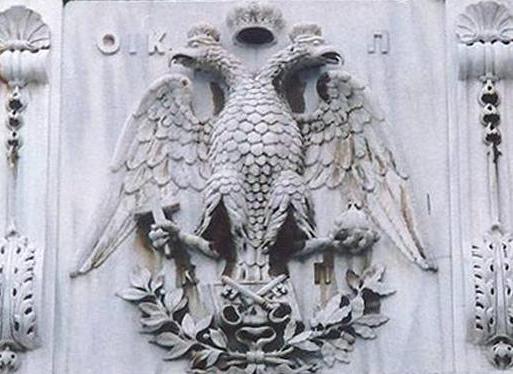
Byzantine Eagle
From there he bullied and freighted the western Monarchs and even the Holy Roman Emperor Frederick II into submission. The latter remarked, with good humour, that he would become a good falconer for Batu Khan. And indeed before the establishment of the Latin Empire of Byzantium, the western Roman Emperor was subject to the Emperor of Byzantium. 


The last remark is not without meaning. The Eagle as symbol of the Byzantine Eagle also became that of the Russian Horde and Roman Empire and is symbol over kingship. It may very well be that Frederick II inspired Batu Khan towards a whole new vision with regard to the place of Europe in the Great Horde, which may very well be one of the reasons Batu Khan did not proceed further than the Balkans. 


Tartar map of Golden Horde
The common theory is that he returned to the East upon the death of Ogedei, the Great Khan, to elect - and become himself - the next Great Khan. 


But, we have already seen, that there was little hope of a son of Jochi becoming the Great Khan. Even when he is almost given the opportunity by some of the sons of Genghis Khan - merely because of his merits - he at the last moment declines and favours Mongke to become Great Khan. 


After that, the common theory is the Batu stayed in service of the expansion of the Mongol Empire in the East, but that seems rather out of character. Batu had installed Mongke as first to remain himself the stronger second. It is much more likely that - inspired by Frederik II - Batu Khan started to work on a whole new vision for the West, which he regarded as his legitimate domains. Here his already established place as 'king maker' would take an entirely new direction. 


Batu Khan, would take the in the meantime Latin Empire of Byzantium, more westwards and would become the Pope of the West, not yet even from the Italian Rome, but from the Balkans. From there he would proclaim an entirely new vision. He would conquer Europe spiritually and use for its purpose its own established form of Catholicism. He would do that, so in the long run he would by himself outflank the ranks of the Great Khanate, the Russian Horde. 


Innocent III Lord of the World
It is for a reason that the colour of the Vatican (BatuKhan) is yellow or golden. In the long run the Vatican would become the treasurer and guardian of the Golden Horde, but as such would up to this date, remain a part of the Great Russian Horde, until time would be ripe for a new order. The Novus Ordo.


But for now the western Papacy of Innocent III would remain in the Balkans and only through the period of Avignon become established in the Italian Rome. 


Batu Khan was the third in line from Genghis Khan, the Lord of the World, and as Pope Innocent III he became his replacement for the West. This would make the western Papacy Batu Khan's scheme to get even with the Great Khanate and the humiliation of Jochi by the hands of his brothers.  

Saturday, 17 March 2012

Jochi's dream


The Ulus of Jochi

The eldest son of Genghis Khan was held back from following his father as Great Khan, due to doubts with regard to who his father was. Allegedly his mother, BÖrte, had been kidnapped before his birth and his brothers duly felt he was not one of theirs. Historically this kidnap is portrayed to be by the chief of a minor tribe, but the story does not hold the icing on the cake. 


We feel the exact circumstances of the event is very well reflected in the story of Abram and Sarai. Before Pharao Abram pretends to be Sarai's brother and Sarai, a very beautiful woman in the eyes of Pharao actually becomes Pharaos wife. At the moment Sarai is with issue, Abram reveals the state of affairs to Pharao - apparently no longer fearing for his life, although he now has added fraud to the list of offences and Abram and Sarai are promptly dismissed. The deceit in the old Testament is cleverly concealed by making Sarai 90 years old and putting 13 years between the birth if Isaac en Abram's real son Ishmael. Later it becomes apparent that Isaac and Ishmael were born with one year of each other. The story does not hold the icing on the cake. Isaac was Abram's way into the inheritance of Pharao so to speak. 


Jochi Borjid
note the 'Roman' greeting
Jochi then was the Borjid's clan inheritance to the legacy and blood line of Byzantium and of course Jochi's appearance will have differed quite substantially from that of his brothers. But for Genghis Khan that was no reason to not regard Jochi as his own son. His brothers thought differently and Jochi for that reason became a minor Khan between the Ulus of the Great Khan in the East and Byzantium and Genghis's third son Ögedei received his legacy  . 


But that was no reason for Jochi to waste his other inheritance, apart from the fact that nobody knew about it. To reclaim that inheritance will take a lot of strategy and that became the legacy of the family. The task and duty of 'the blood' so to speak. 


Jochi (B)orjid then is the blueprint for the non-historical character  of Jacob and in his wrestle with Esau (the wolfs clan of the Borjids) Jochib becomes Israel. 


Jochi has 14 sons and one daughter, which resembles Jacob's 12 sons (and Ephraim and Manasse) and one daughter. The name Isaac in the bible story is  Yesügei , Jochi's grand father. 


Jochi will organise his sons into four armies of three chiefs who press the boundaries of the Golden Horde into four directions: North, East, South and West. For the time being two chiefs without land will stay behind - probably - in Kiev and for that reason Kiev will be modelled after Constantinople. 


Batu Khan takes the lead westwards. Allegedly, in our history books this mission did not result in any success due to the death of the great Khan in the East. But Batu Khan approached well beyond the boundaries of Hungary and to withdraw solely to go back, because the Great Mongol Khan had died does not look like sound strategy. Why would the son of Jochi succeed where his father was rejected, a scar which still soared? 


And how likely is it that European princes - kings paying tribute to the Emperor (Khan) - could deal with two exorbitant claims at the time. That of a victorious Batu Khan and that of Pope Innocent III? Namely to be 'the lord of the world'. Not only are the claims similar, but the reluctant submission of the European princes was also similar. 


Would it not likely be so that Batu Khan had arrived at his own version of the 'great Khanate'? The great Khanate in the East for the time being outside the reach of the Jochi Borjid family? 
Slavic Pope


Then it may very well be so that Innocent III, the real founder of the Papacy, was none other than Batu Khan. No valid formal papal documents exist before this Pope with his unusual claims. But more unusual is the begrudged acceptance of them by the European nobility.  


BatuKhan. Note the tulban
and his slavic appearance
It has to be said though that at this stage Batu Khan did not reside in Rome yet as this seat was actually established after the period of Avignon. As a token of reminder the Pope's residence was called 'the Vatican'. Probably Batu Khan's (or Innocent III) residence was first located at Sarajevo and was Batu Khan at this stage not a catholic, but at best an Arian and more likely an adherent to Islam (not to be confused with modern Islam). That is: the Pope's principle objectors in those days were the catholic princes, which indeed confirms to classical history rather well. The situation is only rather poorly understood. 


Innocenti PP no. III
It comes  not as a surprise then, that Innocent's (alleged) remains were not buried in Rome at all, but were brought to Rome by Pope Leo XIII in the 19th century!


Note his slavic/byzantine features in the fresco and the text in the fresco. Innocenti .PP. III! Does Batu Khan not count backwards to Genghis Khan? 


'The lord of the world?' no. III?


Which gives ample thought to all the II's and III's before Innocent. Does this mean that there were no popes before him? Not at all, but they were attached to the Byzantine tradition and lived in Alexandrie, for which reason the Coptic Patriarch still is called Pope to this very day. With Innocent a whole new brand of papacy started in the West, for which reason the eagle in the image above and Innocent himself look westward. This of course immediate invalidates a claim to 'catholicism', because Batu Khan's assignment was in the west. On behalf of the golden Horde of Jochi, for which reason Vatican's colour to date is yellow...

Friday, 2 March 2012


The British Edda

In the far off Iceland over eight centuries ago parchment manuscripts were found which well anticipated the stories of the Old Testament written in epic verse a couple of hundreds of years before Shakespeare wrote his plays and the King James version of the bible appeared. 


Know ye yet the edda
know ye yet it all?

It tells the story of Adam and Eve in a form which is much more historical as the stories of the Old Testament. Having come to life magnificently in the edition by L.A. Waddell he even comments: "The edda is historic, not only in the sense in which epic poetry in general is historic." "The historicity of the Eddic personages and events is attested both by pre-Roman British monuments and coins and by the ancient Sumerian, Babylonian, Hittite, Phoenician, Egyptian, Indian and Greek inscribed sculptures and literary remains."


Adam Thor
Adam's world is a gothic world centred around the foundation of the city of Troyes at the Bosporus, which Adam-Thor as the historical king Dardanus founded and from which he spread his mission of parliamentary government and scientific education to the human races of his day: Dwarfs, Edenites, Asas (Goths),
Elfs,  Brimis, Bluelegs, Lyons and Wolves.


How shall we shield the dwarfs
and shape them into people
Both from the Brimis blood
and from the blue legs. (scene III)

   The Dwarf chiefs were the first to be admitted to the Parliament (or round table) and the Edda tells us they were 'O' the Lion kindred'. The goat (later replaced by the Unicorn) and the Lion are the oldest heraldic symbols and very much connected to the Byzanthine Empire, with its capital Troy or Constantinople. 


. 
The Asas hit upon
 the Vale of (Mount) Ida
A Holy Land I see there lying,
nursed by the Asa and their Elfs
E'en in Thrud Hame (Troad)
Shall the Thor race be
until the ripping up
of royal rulers

The Hame of Thrud or Jerudz is the capital of the Holy Land Jerusalem! At least according to the Edda!


Then the Edda relates how AdamThor proceeds in civilizing the Wolf tribe or Edenites, who are not so easily subdued. The Wolf chief Wodan with his consort and high priestess Ymi or Gummi.


Early it was of old
that Ymi bigg'd herself in Eden
Aware was she of no sand nor sea
Nor of cool swelling waves
Nor of other trives on earth
Nor of heaven above
Aware was she only of Gunning Gulf

Edenite Wolf 
The Edenites then were a cave dwelling people and the Edda relates that their serpent cult of El was the only religious cult on earth until AdamThor started to give science and light to the various peoples. 

Ymi or Gummi had nuns or vestal virgins gathered around her and the Edda tells how Eve was one of them and it was Ymi who thought out the idea that instead of being colonized by AdamThor it would be better to give Eve, who was considered her daughter, in marriage to AdamThor. 

Eve though was not of Edenite descent, but was a Gothic vestal virgin in the religious cult of Wodan. As high priestess in that cult, she had been one of the wives of the Chief. As a Goth she was tall and beautiful.

Genghis Khan now claims descent from Borte Chino (blue grey wolf) and his wife Gua Maral (beautiful fallow doe). Wodan or Vrodan the Wolf then is none other than Borte Khan the original ancester of the Khans of the family of the Borjids. 

The fallow doe (female deer) did not live in Mongolia, but did originate from Turkey, which is as much as saying that Gua Maral was of Gothic descent. Gua is Even and Mar of El becomes Mar of Ya or Mary.

Saturday, 11 February 2012


Similarities between 
Charlemagne en Genghis Khan


There are many similarities between Genghis Khan and Charlemagne, which are striking: Both men have unified their empire and can't decide on a successor amongst their sons. Both divide the empire up into three parts and give each part for their sons to reign over as equals. In both one of the sons gets worked out of his share. For both men historians do not exactly know how they died with rumors from the consequences of a Hunt, fall from a Horse or even a lung disease: pneumonia.


Genghis Khan is by contemporary history regarded as the founder of the Chinese empire, but A. Fomenko makes a very good case in showing that Genghis Khan or Batu-Khan was in fact the founder of the Russian Horde.


And Genghis Khan is no less the Great Prince or Batu Khan! Or if you like the great Man as in Charlemagne.


But how and why came the Great Russian Khan super-imposed on western history to figure as its archetype and represent the start of its history? Or was Austrasia, this name having so little in common with Frankish Princes really in Asia, that is Eastern Asia. Or if you like East Russia? And was Neustria then not New Russia? Let us not forget that even our western history in the end leads the origin of the family of the Pepins to... White Russia!


Like Charlemagne who receives his heritage from his grandfather Charles Martel, Genghis Khan receives his heritage from Khabul Kahn, or again the great Kahn (Khabul = akhbar = great).


Genghis Khan born Temujin Khan married  Börte and
that is not a stretch far from Bertha Charlemagne's mother and wife of Pepin the short. Börte came from Olkhunut or Olgghirat, which contrary to sources who want Genghis Khan to be chinese, was in Hungary or White Russia and that's exactly where Pepin's Bertha's origins are. 


There was a mysterious disappearance of Börte in the form of a kidnap or marriage to a rival party and by now we are no longer surprised that also Pepin's Bertha came into trouble. And as for Börte's son Jochi who allegedly resulted from the liason during the kidnap, also Bertha had to fight for her children's heritage, because of disputed lawfulness. 


But in the end  Börte  became the grand empress of the golden Horde and her son Jochi did become the successor after which Genghis Khan mysteriously disappears from the scene, allegedly having died, but his grave kept unknown.


The golden Horde was a feudal order with local princes paying tribute and 10% taxes to the great Khan. 


A feudal system like this existed in western Europe also, but it was not as unified and solidified as in Russia. Since it was not possible for the russion 'Horde' to politically establish their order outside the borders of its own territory means were established which were essentially commercial. 


For this reason after 1100AD cities developed in Europe, which had a commercial bond with Russia. These were the 'Hanse' cities or the commercial nodes of the Khan. This means that as early as 1100 Russia had the means to establish commercial links, where cities were founded at regular distance from each other.


There remains one 'void' to fill, which we established previously in our research of Charlemagne. This was Charlemagne's link to Rome (italian rome that is) and the Papacy. Have we stumbled here upon the major difference between Charlemagne and the great Khan of Russia? Or does the history of Charlemagne tell us something about an aspect which is lost in what history tells us about Genghis Khan?

Friday, 20 January 2012

the Golden Age

Charlemagne in context

After the time of Charlemagne the world became divided into four regions and Charlemagne - whose name is in fact a title more than a persons real name - was a reflection of the Emperor who wasn't. His personal name of 'David' how he liked to be called amongst confidentes is not merely accidental. 


In the super imposed connection with Rome as described earlier the Charlemagne period really reflects two things. One: the failure of the first Roman project and two: the hands behind the scenes of this failed project. In the Old Testament, which is written well after the New Testament, this failure is adequately described in the fall of Babylon. 


The world, through the failure of the Roman-Charlemagne project, fell entirely into disarray, but first into four parts.
- Ethiopia
- Niger
- Romae
- Iudea Romana


The Patriarchates of  those four regions were:
- Ethiopia: Antiochia or Indian Goa (founded by apostle Thomas)
- Niger     : Alexandria (Apostle Peter and therefore Prime
                                        Patriarchate)
- Romae  :  Ravenna
- Iudea Romana : I(e)R(u)Salem  or City of Iudea Romana


Through the 'world' conquest of Alexander the Great the world capital became Alexandria and the failed project of Babylon (Romae) became superimposed on Alexandria, for which reason it was known also as Roma (as a singular now). 


It was from here that the 'Pope' Victor (African!) started the first imperial demands on other churches regarding the date of Easter.


A. Fomenko for that reason seems correct regarding the Chronology issues  and the dividing up of the world into four regions must have happened at the time where regular chronology positions the failed project of Charlemagne. In fact it is confirmed by the actions and behaviour of for instance Charles the Hammer.

This becomes very obvious, because - even according to regular chronology - the world in the XI-XIV century matches exactly the divisions marked by the cross on above map.


- The Byzantine Empire had a Judaic form of Catholicism, quite distinctly different from the later Latin version.
- The Ethiopian form of Iudaic Christianity was the basis for later Islam, claiming for instance the South of Spain...
- Alexandria and Cairo may very well have been the same cities, since Cairo just means that Caer=City. It was in that form the Imperial world capital before the world fell apart in four regions. 
- Romae with the Christian patriarchate in Ravenna.  Although the whole region was called 'Romae' the city of Rome (Babylon) was not even a Christian city. It was governed by the Pagan Love cult of Cybele and may well may have been the original Babylon.


Around that time the Judaic Christian (and even pagan) creeds were not at odds with each other at all and though they developed with different distinct characters in the four corners of the world, they were in unity with all their differences. Moreover, they were tolerant.


That would soon change. After the world falls apart in four regions - again due to the failed project of Charlemagne - the world fell into a long period of war and the religious creed fell apart into four distinct religious forms, which resembled each other in many ways. Only later around XVII century they grew very much apart, with each their own distinct scriptures, customs and dogmas.


Hence regular Chronology is wrong when it claims that the world after Charlemagne fell apart in two creeds, namely the Orthodox Chruch and the Latin Church. The world fell apart in four different creeds, namely: 
- Christianity   (hostile to Iudaic Catholicism or Orthodox creed)
- Judaism         (Far from what is Judaism now, original Orthodox)
- Islam             (same as above, another form of Orthodox creed)
- Hinduism      (again same as above)
Each of those creeds developed in their own distinct regions: Christianity - Europe - Romae
Judaism - Greece/Turkey - Russia
Islam - Niger/EurAsia  - Afro Ethyopia
Hinduism -  South Asia - Asian Ethyopia.